
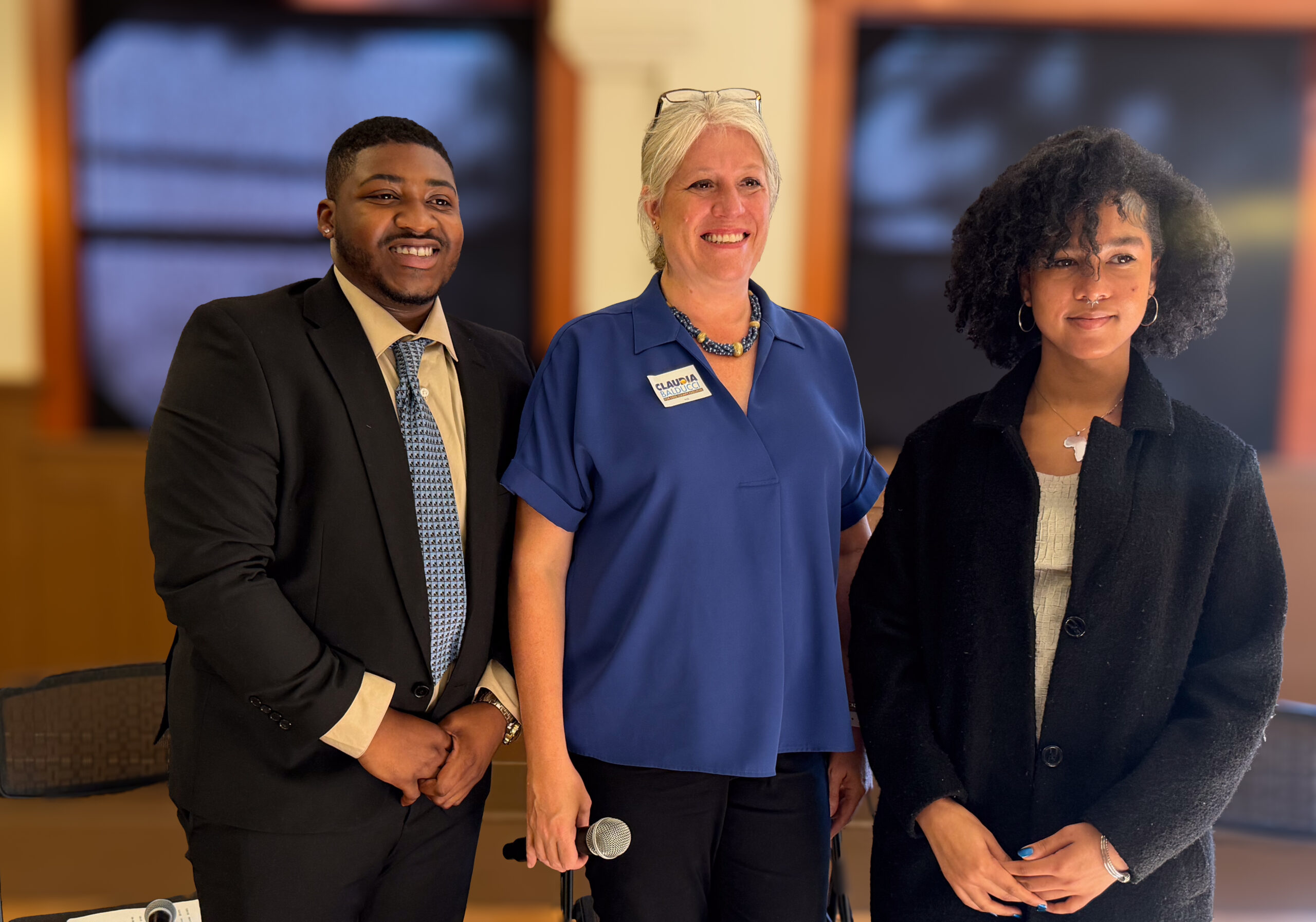
Organizers: King County Equity Now
Moderator: Latricia Jackson & Fynniecko Glover Jr
Location: Brunch & Ballots Voter Education Forum
Candidates: Claudia Balducci
Opening & Introductions
Moderator:
How are you today? Please introduce yourself and why you’re running.
Claudia Balducci:
Running around, but glad to be here. I’m a King County Councilmember representing East King County (about two-thirds of Bellevue, plus parts of Kirkland, Redmond, Mercer Island, and nearby communities). I’m a former Bellevue City Councilmember and Mayor. Before being elected to the County Council, I worked for King County in labor relations and at the Department of Adult & Juvenile Detention (12th & Alder facility). I’m a labor attorney by training.
I come from a public-service family (teacher, court officer, firefighter). I want a county that’s accessible, fair, equitable, and works for everyone. That means:
- Housing: Enough homes so people can live, own, and stay where they choose.
- Transportation: Finish light rail and bus networks so people can get around.
- Public Safety: A full spectrum approach — fair, well-trained law enforcement and real investments in youth, communities, education, and jobs.
- Defending local priorities: With federal shifts and threats, we must protect funding, programs, and our values.
Summary:
The candidate frames the race around four pillars — housing, transportation, safety, and protecting local priorities from national headwinds.
Reparations — Support & Implementation
Moderator:
Do you explicitly support reparations for descendants of chattel slavery and decades of anti-Black policy in King County? How would you fund/implement?
Claudia Balducci:
Yes. My office received a funding request from the King County Office of Equity & Social Justice (EMIA) for $300,000 in this budget to take the next step — identifying where reparations should go. I support and am advocating to include this in the budget.
Summary:
Supports reparations; backing a concrete budget step to scope recipients/implementation.
Data Disaggregation & Accountability
Moderator:
County data often hides disparities. How will you ensure disaggregated outcomes for Black residents (specifically African Americans) and hold departments accountable?
Claudia Balducci:
We must measure what matters. King County has struggled with IT and measurement systems, but outcomes require clean, disaggregated data. This includes nuanced views (e.g., Asian subgroups). I’ve implemented reforms with metadata and reporting in the past and will push to build systems that track results and tie spending to community impact.
Summary:
Commitment to building the tools and governance so disaggregated data informs outcomes — not just spend.
Affordable Housing & Vacant Units
Moderator:
How will you leverage county resources to create affordable, accessible housing for Black residents, especially given vacant units?
Claudia Balducci:
Housing must be a top priority. Historically, agencies said “we don’t do housing.” I’ve pushed them to do housing. Priorities:
- Surplus public land near transit (e.g., Sound Transit sites) at low/no cost for affordable housing.
- Partner with cities to align plans, permitting, and zoning to enable more homes where needed.
- Expand community partnerships (e.g., culturally specific housing). I want to build a similar Black community housing partnership in historically impacted neighborhoods to help people stay.
Summary:
Unlock public land, align with cities, and scale community-led housing — with a dedicated Black community focus.
Community Control of Resources
Moderator:
How will you ensure Black-led organizations receive direct funding and decision-making authority over programs impacting Black communities?
Claudia Balducci:
Place community leadership inside the Executive Office (potentially at the Deputy Executive level) to build direct relationships and accountability. Scale Participatory Budgeting — dedicated human services dollars where community panels determine investments (youth, education, parks, etc.). People closest to the issues should have real control.
Summary:
Elevate community leadership in the exec office and expand participatory budgeting to put dollars under community control.
Gun Violence — Prevention, Intervention, Healing
Moderator:
What prevention/intervention/healing resources will you direct to Black communities affected by gun violence?
Claudia Balducci:
We’ve begun investing in violence interruption (e.g., Harborview bedside interventions). But we must reassess what’s working as federal funding retreats. Convene community to target root causes and fund the right things, with early, focused, persistent interventions.
Summary:
Continue and sharpen interventions, reassess efficacy with community guidance, and sustain with local funding.
Lightning Round (Yes/No)
- Disaggregate data for descendants of American chattel slavery? → Yes
- Reparations for descendants of slavery harmed by anti-Black policies? → Yes
- $1B Reparative/Development Fund (public + private) for housing, business, workforce? → Yes (with work to identify sustainable funding)
- Black community control over resources intended for Black communities? → Yes
- Significantly increase paid youth opportunities? → Yes
- Prioritize funding for shovel-ready community-led affordable housing (e.g., Cairo site) and homeownership projects? → Yes
Summary:
Clear support for data equity, reparations, a large reparative fund, community control, youth jobs, and shovel-ready Black-led housing.
Audience Q&A Highlights
Q: Juvenile detention & re-entry — education, mental health, stopping recidivism?
Claudia Balducci: Restore in-facility education & programs to former levels and invest earlier in at-risk youth before incarceration. Ensure warm hand-offs to support after release.
Q: Participatory budgeting is tedious; how will you actually deliver?
Claudia Balducci: I’ve moved complex government machinery before (light rail expansion on the Eastside, shelter siting, housing pushes). I’ll sponsor, vote for, and fight for the reparations planning step and work to find funding sources (including ballot if needed).
Q: Why you vs. your council colleague?
Claudia Balducci: I’ve won big, difficult fights in government over 25 years and know how to move the system. I’m newly showing up more in these spaces — and intend that to be the beginning, not the end.
Q: Housing wealth loss estimate ($5B) due to discriminatory practices — move on housing now.
Claudia Balducci: Acknowledged; housing is a known category for reparative action.
Summary:
The audience pressed on carceral reforms, execution details, respect for Black labor, and political will. The candidate emphasized track record and commitment to sponsor/vote/fund next steps — with community at the table.